

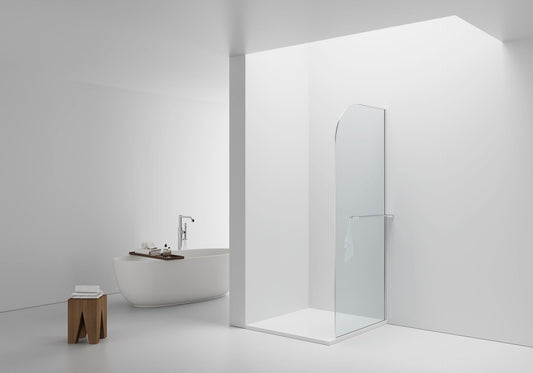


You should choose the right bathtub primarily based on the available space, the desired look, and the comfort that matters to you. A freestanding bathtub requires more space around it and is often a striking feature in the bathroom, while a standard bathtub, corner bathtub, or semi-freestanding bathtub can fit neatly against a wall or into a corner.
The material, dimensions, placement of the bathtub faucet, and required accessories also play a role. In this guide, we explain the most important differences so that you can determine which bathtub best suits your bathroom.
Why is choosing a bathtub so important?
A bathtub takes up relatively much space and therefore has a major impact on the layout of the bathroom. Its position determines, for example, how much walking space remains, where the bathroom furniture can be placed, and whether you have enough room for a shower.
In addition, you will often use a bathtub for many years. It is therefore wise to consider not only its appearance, but also lying comfort, maintenance, material, and the position of the drain and faucet. Before making a choice, also view the complete bathtub collection from WDTegels.com to compare different models and sizes side by side.
How do you choose the right bathtub?
Always start by accurately measuring the bathroom. Do not consider only the external dimensions of the bathtub, but also doors, walking routes, bathroom furniture, and sufficient space to clean the bathtub.
- Measure the available length and width accurately.
- Decide whether the bathtub should be freestanding, placed against a wall, or installed in a corner.
- Consider the interior shape and the desired level of lying comfort.
- Choose a material and finish that suit your bathroom.
- Decide in advance which type of bathtub faucet you want to use.
- Check which waste, trap, legs, and other components are included.
Also pay attention to the difference between the external dimensions and the actual space inside the bathtub. Two 170 cm-long bathtubs can still offer different levels of lying comfort due to differences in rim thickness and shape.
Freestanding bathtub: a real eye-catcher
A freestanding bathtub stands away from the wall, making it visible from multiple sides. This type of bathtub is particularly well suited to a bathroom with plenty of available space, where the bathtub can become an important part of the design.
An example from the range is the Wiesbaden Libero freestanding acrylic bathtub 178x80 cm. This model comes with a click waste, trap, and leg set and is made of white acrylic. If you want to compare different models, view all freestanding bathtubs.
With a freestanding model, take the space around the bathtub into account. Especially when the tub is not positioned directly against a wall, you need to retain enough room to move comfortably in and out of the tub and to clean around it.
Corner bathtub for efficient use of the available space
A corner bathtub fits into two sides of the bathroom and can therefore be a smart solution when you want to use the available space efficiently. However, this does not mean that every corner bathtub is small: there are also spacious models with plenty of room to lie down.
An example is the Wiesbaden Zenn right-hand corner bathtub 170x75 cm. This acrylic bathtub has a centrally positioned drain and comes with a trap, waste, and adjustable bathtub feet. For other dimensions and versions, view the corner bathtubs collection.
With a corner bathtub, pay close attention to whether it is a left- or right-hand version. The orientation determines which side of the tub is placed against the wall and should therefore match the layout and plumbing in your bathroom.
Bathtub: practical and versatile
A traditional bathtub is usually installed against one or more walls and then neatly finished. This allows you to use the available space efficiently and makes it relatively easy to coordinate the tub with the rest of the bathroom.
Bathtubs are available in various lengths and widths. A longer tub does not automatically offer more comfort: the angle of the backrest, the position of the drain, and the interior dimensions also determine how comfortable it is to lie in. Therefore, view the different bathtubs and compare more than just the exterior dimensions.
A built-in bathtub also offers plenty of freedom in terms of finishing. For example, you can have the surround match the floor or wall tiles, allowing the tub to blend seamlessly with the rest of the bathroom.
Semi-freestanding bathtub: a luxurious look with practical wall installation
A semi-freestanding bathtub combines the appearance of a freestanding tub with the practical advantage of being installed against a wall. The front and sides remain stylishly finished, while one side sits directly against the wall.
This can be especially interesting if you want a luxurious bathtub but do not have enough space to position a fully freestanding model with open space around it. The Wiesbaden Zenn semi-freestanding bathtub 180x80 cm, for example, is made of matte white acrylic and is installed against the wall.
The Liora semi-freestanding bathtub 180x80 cm is also an option if you are looking for a sleek, modern shape. View all models in the semi-freestanding bathtubs collection.
Which material will you choose for your bathtub?
Many bathtubs at WDTegels.com are made of acrylic. Acrylic feels relatively warm, is lightweight and has a smooth finish, making it easy to keep clean. There are also models made of solid surface, a material chosen mainly for its sturdy, high-quality appearance.
The choice of material affects the weight, price, maintenance and appearance. For heavier bathtubs, also take into account the surface and structure on which the bathtub will be installed.
Also consider the finish. Glossy white creates a classic, fresh look, while matte white works well with modern bathrooms featuring calm colors and natural materials.
Which bathtub faucet suits which bathtub?
You should preferably choose the bathtub faucet at the same time as the bathtub. For example, a freestanding bathtub can be combined with a tall freestanding bathtub faucet connected from the floor. An example is the Aloni freestanding bathtub mixer tap with hand shower in matte black.
With a bathtub positioned against the wall, depending on the situation you can also choose a wall-mounted or built-in bathtub faucet. Check in advance where the pipes need to be installed and whether the selected faucet has sufficient reach over the bathtub.
For this, view the complete range of bathtub faucets. Choosing the faucet and bathtub at the same time prevents the selected combination from turning out to be technically or practically unsuitable during installation.
Which accessories do you need for a bathtub?
Not every bathtub comes with the same components as standard. Some models are supplied complete with a waste set, trap and adjustable bathtub feet, while with other versions you need to purchase these components separately.
Therefore, always check the product description before ordering accessories. In the bathtub accessories collection, you will find parts for installing and finishing the bathtub correctly.
An overflow combination prevents water from running uncontrollably over the edge while filling when the system is designed for this purpose. A suitable drain and trap are also essential for draining the bathwater correctly.
What size bathtub do you need?
The ideal length varies from person to person and depends on the bathroom. Many bathtubs are approximately 160 to 180 cm long, but the range also includes more compact and larger models.
If you have limited space, do not automatically look only at the shortest bathtub. A smartly shaped corner bathtub or back-to-wall model may fit the layout better than a short traditional bathtub.
If you have a spacious bathroom, you can pay more attention to bathing comfort and appearance. A larger freestanding bathtub has enough space to make a visual impact and can become the centrepiece of the bathroom.
Common mistakes when choosing a bathtub
One of the most common mistakes is measuring only the space for the bathtub itself. Also allow for walking space, the swing radius of doors, access to the faucets, and the possibility of cleaning around the bathtub.
In addition, a bathtub is sometimes purchased first, and the faucet and drain are only considered later. This can lead to extra installation work if the pipes or connections are not in the correct position.
Finally, carefully check what is included. A product may already include a waste, trap, or leg set, for example. Checking this in advance prevents duplicate purchases or missing parts during installation.
Conclusion: which bathtub is best suited to your bathroom?
The best bathtub is the model that suits both your available space and the way you use it. A freestanding bathtub is ideal when you have sufficient space and want to create a striking feature. A standard or corner bathtub makes more efficient use of the available square metres, while a back-to-wall bathtub offers a beautiful middle ground.
Always compare the dimensions, material, installation, included parts, and the required bathtub faucet before ordering. Would you like to view all the options side by side first? Then view the full collection of bathtubs at WDTegels.com.
Frequently asked questions about choosing a bathtub
How much space do you need for a freestanding bathtub?
That depends on the dimensions and placement of the chosen model. Consider not only the size of the bathtub itself, but also sufficient space for getting in and out, cleaning around it, and keeping any connections accessible. In a smaller bathroom, a back-to-wall bathtub may therefore be more practical than a fully freestanding model.
What is the advantage of a corner bathtub?
A corner bathtub makes efficient use of a bathroom corner and can therefore work well in a layout where a fully freestanding bathtub would take up too much space. Corner bathtubs are also available in various sizes and left- and right-hand versions. Therefore, check in advance which orientation suits your wall, pipes, and other sanitary fixtures.
Which material is commonly used for bathtubs?
Acrylic is widely used because it is relatively lightweight, feels pleasant, and is easy to keep clean. Bathtubs are also available in materials such as solid surface, which often have a heavier, more substantial appearance. The best material depends on your budget, preferred look, and maintenance requirements.
Which tap is suitable for a freestanding bathtub?
A freestanding bathtub tap that rises from the floor next to the bathtub is often chosen for a fully freestanding bathtub. Depending on the layout, a wall-mounted tap may also be possible, for example when the bathtub is relatively close to a wall. Always check the spout reach and determine the tap position before installing the pipes.
Is a back-to-wall bathtub suitable for a smaller bathroom?
A back-to-wall bathtub can be a good choice if you want the look of a freestanding model but have less free space. Since one side is placed against the wall, you do not need to leave walking space behind it. However, always measure the exact dimensions and check that doors, furniture, and other bathroom fixtures have sufficient space.
What size bathtub should I choose?
The right size depends on your height, preferred reclining position, and available space. Do not look only at the external length, as the internal dimensions and the shape of the back and foot ends largely determine comfort. Therefore, compare several models with similar external dimensions before making a final choice.
Do I always need a separate waste and trap?
No, that varies by bathtub. Some models include a waste, trap, and even adjustable bathtub legs, while these must be ordered separately for other products. Therefore, always check the “specifications” section or the product description so you know exactly which accessories are still needed for installation.


