



A small bathroom usually looks more spacious with a calm tile base, few visual interruptions, and a limited number of colors or patterns. Size is not the only factor: grout color, laying direction, and the distribution of wall and floor tiles also determine how open the space feels.
Large-format tiles are therefore not always the better choice. Small tiles can be a smart choice on a shower floor, in a niche, or as an accent. Below, see what really matters: size, use, grout, safety in wet areas, and calm tile ideas that make a compact bathroom look more spacious.
What makes a small bathroom look more spacious right away
Tiles make a small bathroom feel more spacious mainly by creating a calm look. Fewer tile types, less contrasting grout, and no busy mix of styles create a more harmonious feel. Continuing the same tile or look across several surfaces often makes the room seem larger than a bathroom with lots of transitions. Light, wall width, and ceiling height matter just as much as the number of square meters. So when choosing the best tiles for a small bathroom, consider not only the size, but the overall look of the space.
Large or small tiles? Choose based on both appearance and use
The smartest choice depends on the location. In a small bathroom or toilet, no single size works best everywhere.
| Tile type | Advantage | Keep in mind | Often a smart choice for |
|---|---|---|---|
| Large tiles | Calm look, fewer grout lines, easier to clean | Planning cut lines well remains important | Main walls and floors in a small bathroom or toilet |
| Medium-sized tiles | Balance between a calm look and flexibility | Less sleek than large-format tiles, but often easier to fit | Compact spaces with multiple corners |
| Small tiles | Useful in awkward areas and for sloped floors | More grout lines and a busier look if used everywhere | Shower floors, niches, accent walls, small toilets |
Tile sizes that often work well in a small bathroom
For wall tiles and bathroom tiles, these size categories often work well in compact spaces:
- 30x60 is a popular wall tile size: calm, practical, and easy to lay out in smaller areas.
- Larger formats such as 60x60 or elongated options such as 60x120 cm tiles can work beautifully on floors or walls, as long as the cut lines fall in logical places.
- 10x20 and 10x30 work well as wall details, for example in a niche or behind a vanity unit.
- Use 10x10, 15x15, or 15x17 selectively, not across the whole room in a busy pattern. One dominant size usually looks calmer than mixing several sizes.
Use the tile layout to adjust height and width
You can use the tile layout to visually adjust a small bathroom. Vertical placement often makes a low room look taller, while horizontal placement can make a narrow wall appear wider. Elongated tiles enhance this effect. Busy patterns, such as herringbone or lots of offset rows, can make a compact space feel cluttered and often result in more offcuts. So account for niches, shower drains, vanity units, and corners in your layout plan.
Small shapes, hexagons, and mosaics: use them selectively
- Small bathroom wall tiles, hexagons, and mosaics work best where details really add something: in a niche, on a backsplash, or in a narrow accent strip.
- Small shapes are often more practical than large slabs on shower floors or in compact corners, especially where a slope is needed.
- Keep the grout color close to the tile if you want a calm look. This makes small-format tiles look less busy.
Color, sheen, and grout color make all the difference
Light shades, such as white tiles, usually make a small bathroom feel more open and spacious. Dark tiles can also look beautiful, but often work best as an accent or in a well-lit space. On walls, a glossy finish helps reflect light, while matte or lightly textured floor tiles are often more practical for everyday use. Grout color also makes a big difference. Grout close to the tile color keeps the surface calm. Contrasting grout highlights each tile instead. With bold colors or patterns, the result looks best when the rest is kept simple.
Making the right technical choices prevents regrets later.
Ceramic tiles are often the practical choice for a small bathroom. They are low-maintenance, suitable for everyday use and widely used in wet areas. Do note the difference between wall tiles and floor tiles. A wall tile is not automatically suitable for the floor, and slip resistance is important for the bathroom floor or shower. Only choose non-slip bathroom tiles that are suitable for wet areas according to the product specifications.
Rectified tiles allow for narrower grout lines, but require a level surface and careful installation. Also check how easy a tile is to clean and whether the chosen floor tile can be combined with underfloor heating according to the specifications. If you're unsure about looks or sizes, it helps to compare bathroom tiles and wall tiles side by side, assess a sample first where possible, and read more about choosing floor tiles for the bathroom.
Subtle tile ideas for a small bathroom
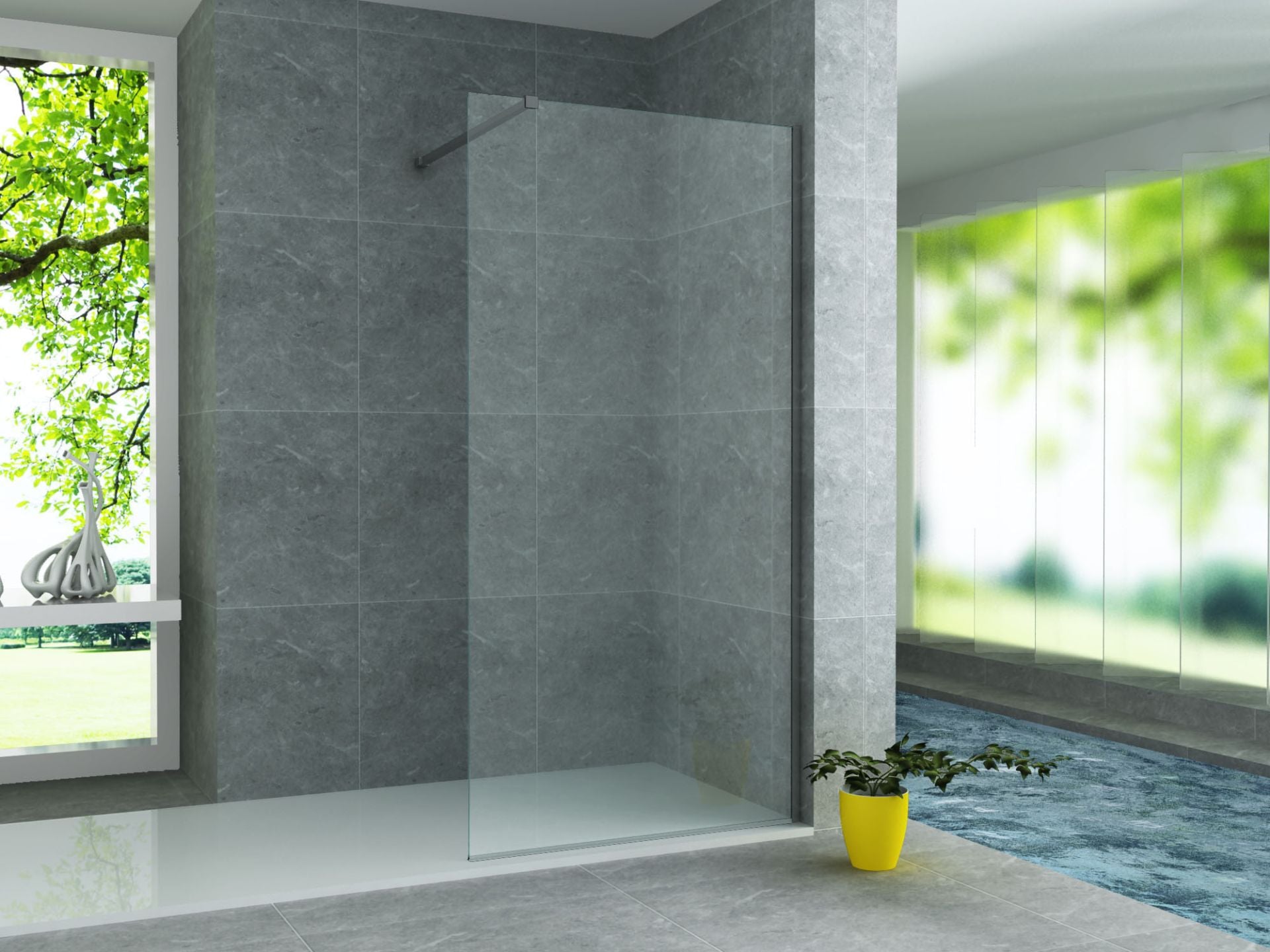
- Choose a subtle concrete look as the main tile for the floor and walls. This creates a clean, continuous look with few visual breaks.
- Pair clean-lined wall tiles with one small accent in the niche or shower area, such as subtle mosaic, small hexagons or narrow wall tiles.
- If you want more warmth, a subtle wood look often works better as an accent than as part of a mix with lots of other patterns. A soft marble look can also be beautiful if the rest of the room stays understated.
- Half-height tiling can work if the upper wall stays calm and the room gets enough light. In many small bathrooms, tiling up to the ceiling creates a more cohesive look, with fewer breaks and a cleaner overall effect.


